


Mind Candy is a newsletter on practical philosophy—ideas meant to be lived. Each month, we explore a new theme and examine what it demands of our lives.
This month we’re exploring integrity.
Welcome to Sweet Bites, Mind Candy’s bite-sized newsletter with thought-provoking finds to send you into the weekend with.
🍰 Mini Bites of the Week
🍰 Story:
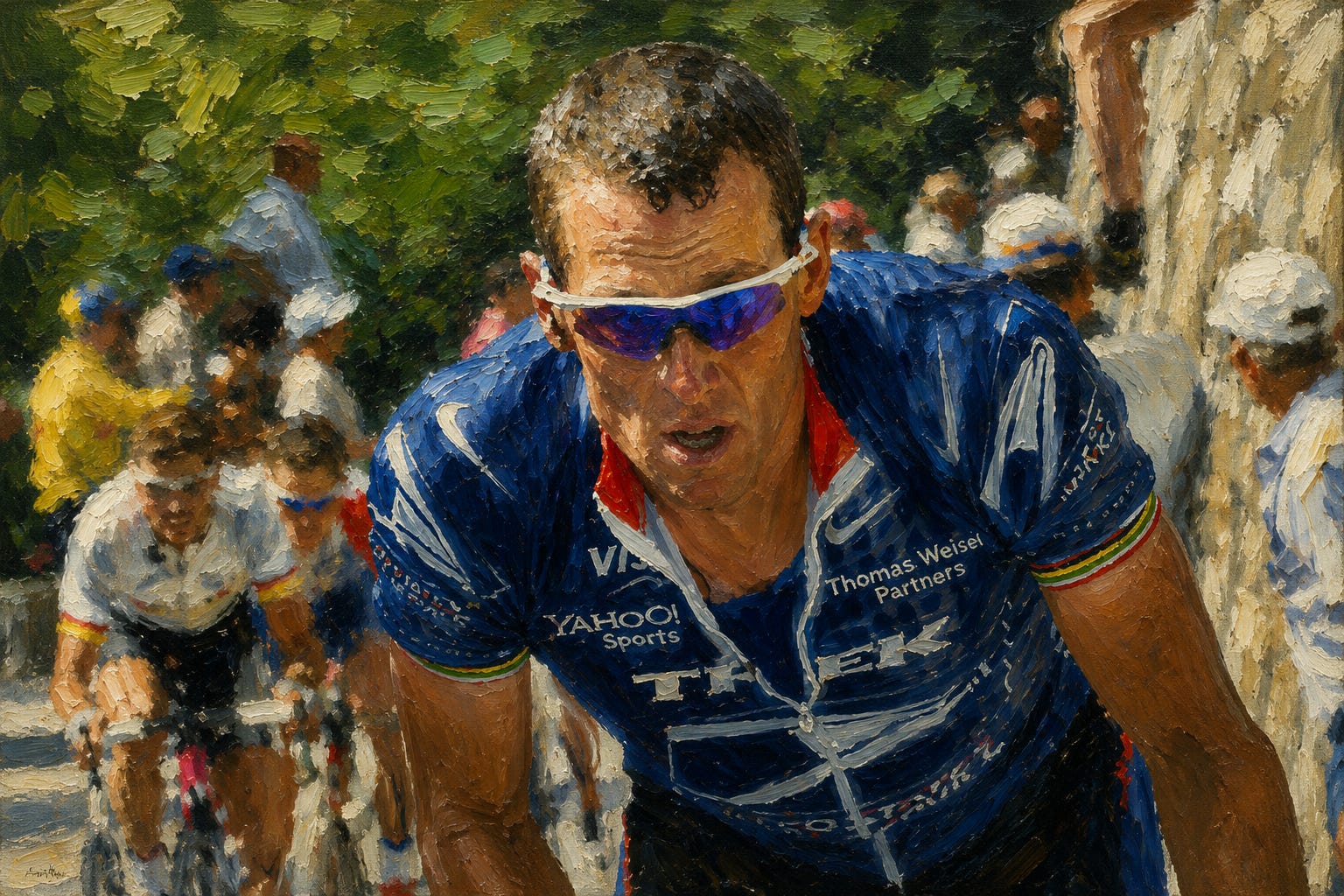
Lance Armstrong was the type of athlete who not just competed in a sport but defined it.
At the age of 21 he had already turned pro and soon after, won his first championship.
And then, at the height of his early success, he was diagnosed with cancer. Testicular. Lung. Brain. He was given a fifty percent chance of living.
He did.
Not only did he beat the cancer, he came back stronger, going on to win seven consecutive Tour de France titles, the record. He started Livestrong, his cancer foundation, with individuals from around the globe sporting their signature yellow Livestrong bracelet, working in solidarity, to support those going through the worst time in their life.
He wasn’t just a success, he was a symbol, a beacon of hope to so many.
And then it was revealed he had been doping since 1995.
The symbol crumbled. The public turned on him. The sponsors all left. The downfall was swift.
The problem with Armstrong’s fall from grace was not that he cheated, but that he did so under the guise that he couldn’t do it any other way.
When asked in an interview if he went back in time, would he do it again, he responded, if it was 2015, no, because it was not necessary, but if it was 1995, then yes, he would.
What he meant was he joined the sport when it was riddled with athletes using performance enhancers. By 2015, it had become too hard to get away with, the sport had cleaned up its act.
But this is not to say he would not do it because of all the pain he had caused. Rather, it is the phrase we all heard when we were in the playground as children: well they’re doing it, so I will too.
It’s a slippery slope. Not because of anything other than you’ve opened the gate and set a new expectation for yourself. If you’ve already done it, what’s one more time.
The problem is, obviously, one more time is rarely ever one more time. In fact, it would seem one more time is just the thing we say to ourselves for comfort, knowing it will not be the last.
How many times has someone said they’d quit smoking only to light up again the next day? Or to quit cheating only to find themselves face to face with temptation once more?
One more time is the gateway we use to provide credence to what we do.
Until we hold a reckoning, until we solidify that line we will not cross, one more time is but an empty reminder.
Armstrong had the opportunity to abandon the way he was going. He could have righted the ship—after the cancer, after his retirement. But instead, winning was what mattered more than anything. His reputation was on the line, his sponsors, a lifetime of being known as the best.
Rather than dig down and lean in, he slipped back into habit, because the habit meant more than his integrity.
Here was a man at the peak of his career, who held the record for most Tour de France wins, who had built entire brands through sponsorship deals, who had established a non-profit whose purpose was to bring good into the world.
To many, he had it all. But to Armstrong, he still didn’t. He still had more he wanted.
When we refuse to acknowledge the fracturing that is taking place, when we refuse to see the disconnect between what we know to be right and wrong and our actions, we know we have been compromised.
And that’s the problem. Once we’ve been compromised, we’ve opened the gates and are now compromised.
This is where we must pull back from the brink, to install a hardline we will not cross, to ensure we are holding ourselves accountable, because we are the only ones who can.
If we wish to live a life of integrity, we must do so by first holding ourselves to the highest standards. By doing so our actions will follow, and when they follow, others take notice. Others see who we are. And with that, our character forms its reputation.
We become a person of integrity by doing acts of integrity.
Hold the line.
Start today.
🍰 4 Quotes
Todd Rose
“When you commit to congruence, you not only tap into what can become an immeasurably better life but also become a person who doesn't contribute to illusions and, through integrity, can help to dismantle them where they exist. In other words, adopting the virtue of congruence is truly a win-win decision. Indeed, it is the most important thing we can do for ourselves and each other.”
—
Zena Hitz
“Our self-deception about our ends is what leads to the profusion of watered-down, instrumental forms of intellectual life.”
—
Kurt Vonnegut
“We are what we pretend to be, so we must be careful about what we pretend to be.”
—
François de La Rochefoucauld
“We have more strength than will; and it is often merely for an excuse we say things are impossible.”
🍰 3 Reflections from me:
I.
Integrity is an alignment problem. When our values do not match our actions, we feel disconnected from the world.
II.
A life of integrity does not look as flashy as a life of pure desire.
But one leads to flourishing, the other a treadmill of wants.
We can rest our heads at night with one, not the other.
III.
Whatever great advantage we believe lying will bring us, it is only temporary. The true cost is we begin to lose who we are with each lie we tell.

🧠 This Week in Mind Candy 📚
🧘🏻 Monday Meditation:

🦉 Wednesday Wisdom:

📝 Note of the Week:

👀 This Week’s Recommendations
📰 Article Worthy of a Read: Success Will Come and Go, But Integrity Is Forever by Amy Rees Anderson
🔑 Key Takeaway: “Profit in dollars or power is temporary, but profit in a network of people who trust you as a person of integrity is forever.”
📖 Book on Weekly Theme: Lying by Sam Harris
🔑 Key Takeaway: “Once one commits to telling the truth, one begins to notice how unusual it is to meet someone who shares this commitment. Honest people are a refuge: You know they mean what they say; you know they will not say one thing to your face and another behind your back; you know they will tell you when they think you have failed—and for this reason their praise cannot be mistaken for mere flattery.”
🎥 Video to Watch: The Anatomy of Trust by Brené Brown
🔑 Key Takeaway: ““What's integrity?” Here's what I think integrity is. Three pieces. It's choosing courage over comfort, choosing what's right over what's fun, fast, or easy, and practicing your values, not just professing your values, right? I mean, that's integrity.”

Think someone you know would enjoy these? Hit below to forward and spread the love.
Until next time,

D.A. DiGerolamo
We are a participant in the Amazon Services LLC Associates Program, an affiliate advertising program designed to provide a means for sites to earn advertising fees by advertising and linking to Amazon.com.