


Mind Candy is a newsletter on practical philosophy and human flourishment—aka how to live “the good life.” Each month we tackle a new theme.
This month we’re exploring the theme of Meaning.
Last week we explored Camus’s Absurdism:

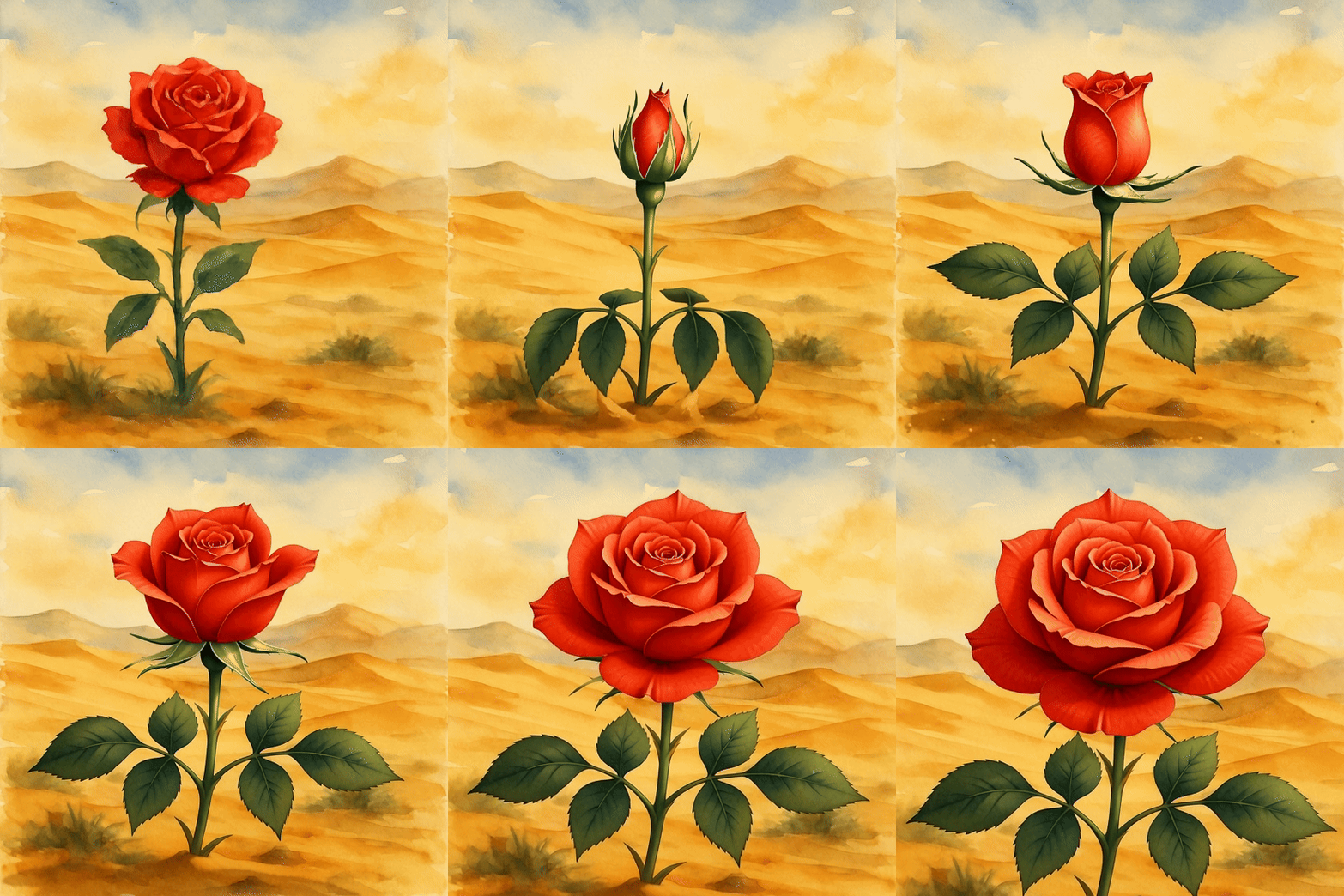
“Man first of all exists, encounters himself, surges up in the world—and defines himself afterwards.”
Before we can apply meaning to our lives, we first must exist.
For centuries arguments have been waged between whether meaning was something prewritten requiring our individual discovery, or something we ourselves create. The French existentialist philosopher, Jean-Paul Sartre, believed the latter and proclaimed within his famous 1945 lecture (and later essay) that we exist and then build our essence.
Essence, to Sartre, can be described as something’s purpose. He famously uses the example of scissors to articulate his case. Whereas scissors are designed for a certain purpose—to cut paper—humans do not have such inherent purpose.
Rather than believing there was divine purpose and meaning within our lives, Sartre believed we are raw, undefined individuals who must chart our own course. We are instead allowed to choose our essence through the choices we make and the actions we take.
In other words, our purpose is entirely driven through our ultimate freedom.
This can be daunting. It takes the approach that the canvas is blank and we are wholly responsible for crafting what it looks like. If that is the case, there is no fallback to faith or divine intervention. It means living with radical freedom to make our lives how we want. In this way, Sartre fully rejected the idea we were made by god with a planned purpose.
Our purpose is not waiting to be discovered, it’s waiting for us to write it. And the meaning of our lives hangs in the balance.
There is something very freeing about this. Like the craftsman taking wood and turning it into form, we are both the maker and material.
Or perhaps a better example would be Albin Polasek’s “Man Carving His Own Destiny” statue.
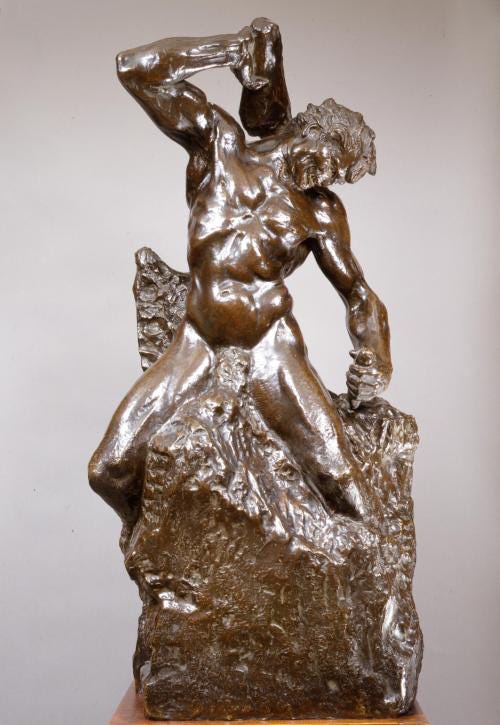
Life is filled with experiences and lessons, each of which shapes us. Each act we take, choice we make, or failure we endure is a lesson building who we are and what we’re made of. Meaning in this way is brought about through how we navigate our lives.
Over time, the web of our relation to the world takes shape and we begin to recognize patterns—what energizes us, what repels us, what we’re drawn toward. This process is never ending, but each choice and subsequent decision further reveals us to ourselves.
The more we engage with life, the more we navigate its uncharted territories, the more we build our character. It is through this process, through this uncovering, that meaning takes shape. In other words, it’s not something to be found, it’s a flywheel of our actions. The more we do, the more we enjoy, the more we discover what we like to do.
Sartre’s view is so heavy because it places full responsibility for one’s life within their own hands.
Pure freedom requires pure unadulterated responsibility for one’s life and actions.
“But we’re at the mercy of the world and others’ actions” one may say. But to be truly free means to manage one’s own actions. To manage how they respond to circumstance, to life’s events, to the good times and the bad.
Our purpose isn’t awaiting our search in this way, it’s channeled through our actions and grows with us.
The meaning of our lives, then, is built through daily engagement with life.
So the question to ask this week: how will you engage today?

Before you go…
If you enjoyed the above article, you may be interested in the following:

Thank you for reading Mind Candy. If you enjoyed this work, please consider upgrading to a paid subscription. Or if now isn’t the right time, please share to someone who could benefit.
Until next time,

D.A. DiGerolamo
We are a participant in the Amazon Services LLC Associates Program, an affiliate advertising program designed to provide a means for sites to earn advertising fees by advertising and linking to Amazon.com.